Break the Tension: Fast Stress Relief in 2 Minutes
Break the Tension: Practical Stress Relief You Can Use in Minutes
Stress builds fast—tight shoulders, racing thoughts, shallow breathing, and a feeling of being behind. The most reliable relief comes from small, repeatable skills that calm the body, steady attention, and prevent avoidable overload. Use the techniques below as a “menu”: pick one for immediate relief, then add a simple time plan to reduce the next wave. For a guided, ready-to-use toolkit, see Break the Tension: Stress Relief Techniques – Breathing Exercises, Quick Meditations, Grounding Techniques, and Time Management Tips to Reduce Stress.
Start with a quick body reset (60–120 seconds)
When stress spikes, the goal isn’t to “think your way out.” It’s to change what your body is doing right now, so your brain stops reading the moment as an emergency.
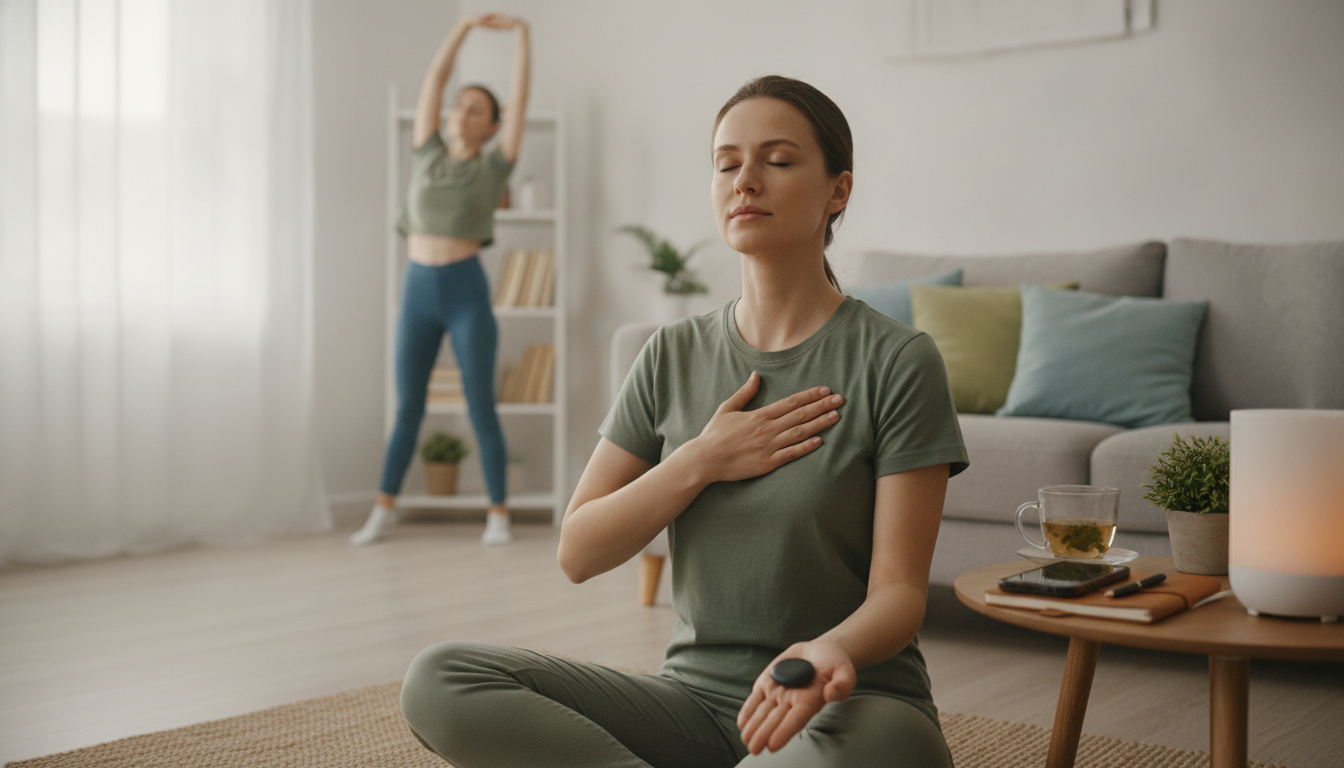
- Do a “posture + exhale” reset: sit or stand tall, drop your shoulders, then exhale slowly until your lungs feel empty; repeat 3 times. A long exhale is a fast signal to downshift.
- Unclench common tension points: jaw (rest your tongue to the roof of your mouth), hands (open/close 10 times), and brow (raise your eyebrows, then soften).
- Change temperature or sensation to interrupt spirals: sip cold water, wash hands in cool water, or hold a warm mug for 30–60 seconds.
- Name the feeling and location: “tight chest,” “busy mind,” “warm face.” Clear labeling often reduces intensity and makes the next step obvious.
- If dizziness occurs during calming practices, shorten the breath, keep breathing through the nose, and return to normal breathing.
For more context on stress and how it affects the body, the American Psychological Association (APA) overview of stress is a solid reference.
Breathing exercises that calm the nervous system
Breathing practices work best when they’re gentle. The aim is smooth, quiet air—not big inhales that feel like “gulping.” Pick one method and repeat it long enough to feel a shift (often 30–120 seconds).
- Box breathing (about 2 minutes): inhale 4, hold 4, exhale 4, hold 4. Keep the breath steady and comfortable.
- Extended exhale breathing (about 90 seconds): inhale 3–4, exhale 6–8. Prioritize a smooth, quiet exhale.
- Physiological sigh (30–60 seconds): inhale through the nose, take a second small top-up inhale, then exhale slowly through the mouth; repeat 2–5 times.
- “Breath + cue word”: on the exhale, silently say “soften,” “release,” or “slow.” A cue word makes the skill easier to access under pressure.
- Best moments to practice: before difficult conversations, before opening email, after commuting, and right before sleep.
| Situation | Technique | How long | What to notice |
|---|---|---|---|
| Racing thoughts | Extended exhale (4 in / 8 out) | 90–120 sec | Mind becomes less “urgent” |
| Before a meeting | Box breathing (4-4-4-4) | 2 min | Steadier voice and focus |
| Sudden spike of anxiety | Physiological sigh | 30–60 sec | Shoulders drop; breath loosens |
| Afternoon slump | Nasal breathing + tall posture | 1–2 min | More alert without jitteriness |
Quick meditations that fit into a busy day
Micro-meditations don’t require a perfect environment. They work because they train “returning”—bringing attention back without adding self-criticism.
- One-minute anchor: focus on one point (breath at the nostrils, feet on the floor, or a sound). When the mind wanders, return without scolding.
- “Noting” practice (2–3 minutes): label what appears—“thinking,” “planning,” “worrying,” “hearing.” Labels create space from the content.
- Compassion reset (60–90 seconds): place a hand on the chest, slow the exhale, and repeat: “This is hard. May I be steady.”
- Micro-meditation between tasks: before switching apps or rooms, pause for one slow breath to reduce carryover stress.
- Consistency beats duration: 1–3 minutes daily is often more protective than occasional long sessions.
If you want a deeper look at mindfulness safety and effectiveness, the NCCIH guide on meditation and mindfulness is a helpful overview.
Grounding techniques for overwhelm and anxious spirals
Grounding brings attention out of “what if” and back into “what is.” Keep it simple—one method done slowly usually works better than stacking five techniques at once.
- 5-4-3-2-1 grounding (2 minutes): identify 5 things seen, 4 felt, 3 heard, 2 smelled, 1 tasted. Be specific (color, texture, direction).
- Feet-first grounding (60 seconds): press feet into the floor, notice heel-to-toe contact, and shift weight gently side to side.
- Object focus (1–2 minutes): pick an everyday object (pen, key, cup). Study edges, texture, temperature, and color like you’re describing it.
- Tension-release scan (90 seconds): tense calves for 5 seconds then release; repeat with fists and shoulders. The release is the point, not the squeeze.
- When emotions are intense: reduce stimulation—lower screen brightness, step into a quieter room, and use one grounding method.
For additional coping ideas and practical guidance, the CDC’s coping with stress resource is worth bookmarking.
Time management tips that prevent stress from returning
If structure is the missing piece, More Time, Less Stress: Time Management Mini-Course – Productivity Ebook with Pomodoro, Eisenhower Matrix & Time Blocking Strategies can help turn these ideas into a repeatable system.
A simple daily routine to “break the tension”
If you want all of these techniques organized as a quick-reference guide you can reuse anytime, Break the Tension: Stress Relief Techniques bundles breathing, grounding, micro-meditations, and prevention planning in one place.
FAQ
How to actually reduce stress?
Combine a fast body-calming tool (extended-exhale breathing or a physiological sigh) with one grounding method to stop spirals, then prevent rebound stress by choosing one next action and limiting your day’s priority list to three items.
How long does it take for breathing exercises to work?
Many people feel a shift within 30–120 seconds, especially with longer exhales. The most reliable results come from brief, consistent practice so the technique is easy to use when pressure hits.










Leave a comment