Vacuum Stress in Pets: Calm Dogs & Cats in 2 Weeks
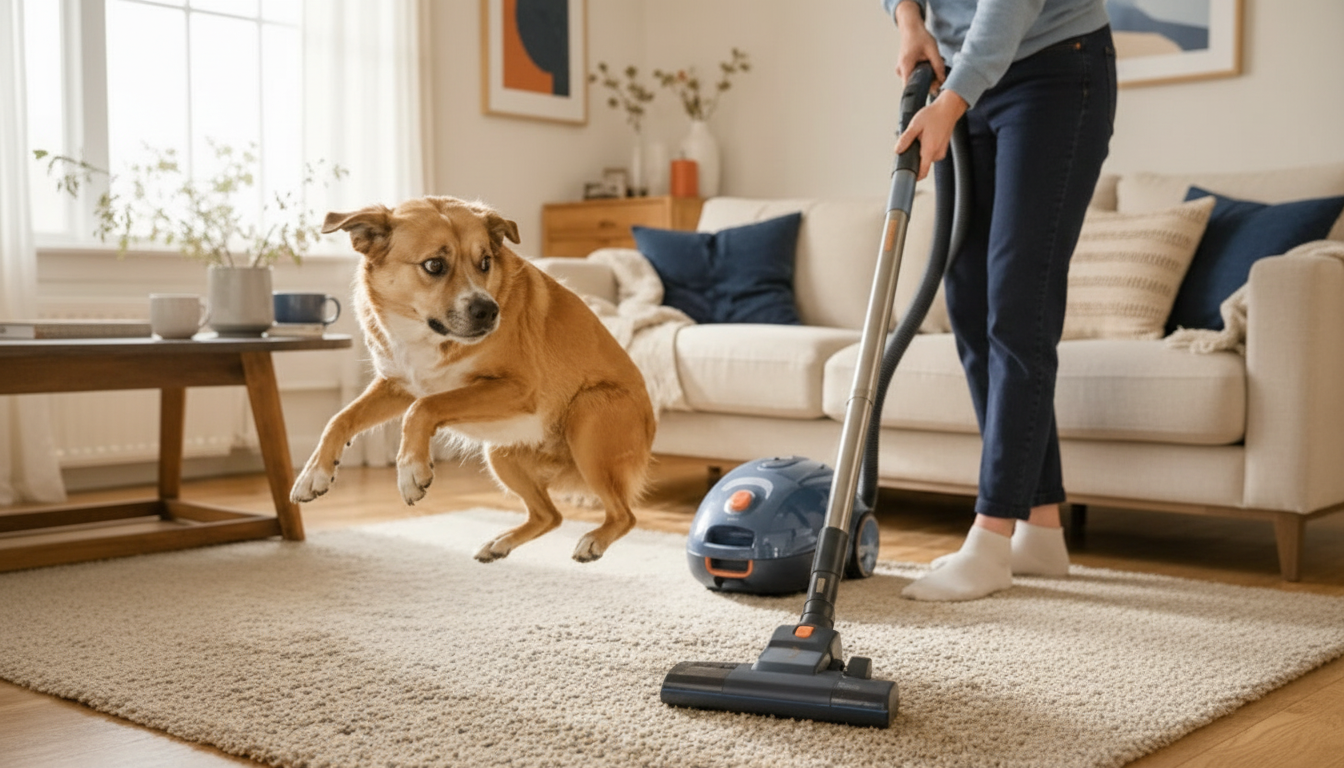
Helping Pets Handle Vacuum Stress
Many dogs and cats react to vacuums as if they’re dangerous predators—loud, fast, unpredictable, and often moving straight toward them. With a few safety steps and a simple training routine, most pets can learn to stay calm (or at least cope comfortably) during cleaning days. For more guidance, see Fearful dogs | Cornell University College of Veterinary Medicine.
Why vacuums feel threatening to dogs and cats
- Noise sensitivity: Vacuum motors can be intense and fluctuate in pitch, which can trigger fear responses.
- Movement pattern: A vacuum “approaches,” changes direction abruptly, and invades personal space—common triggers for defensive behavior.
- Static and smell: Some pets dislike the airflow, dust odors, or static crackle.
- Past learning: One scary event (getting bumped, cornered, or startled) can create a lasting association.
Common stress signals (and what they can lead to)
- Dogs: barking, lunging, circling the vacuum, pacing, panting, whining, trembling, hiding, ears pinned back, tail tucked.
- Cats: bolting, hiding, flattened posture, dilated pupils, hissing/growling, excessive grooming afterward.
- Escalation risk: Repeated exposure without a plan can increase fear over time and may lead to redirected biting or destructive behavior.
- Safety note: If a pet is frantic, prioritize separation and calm over “pushing through” the cleaning.
Set up the environment before you vacuum
- Create a quiet zone: Use a bedroom, crate, or bathroom with the door closed, white noise, and a comfortable bed or blanket.
- Add calming cues: Offer a long-lasting chew (dogs) or food puzzle (cats) only used during vacuum time so the routine predicts something good.
- Reduce surprises: Choose a consistent vacuum schedule so pets can predict what happens and where they’ll be.
- Check escape routes: Confirm doors and gates are secure so a startled bolt doesn’t turn into an outdoor dash.
If your pet’s fear seems tied to broader anxiety or sensitivity, a behavior-focused reference like Understanding Your Pet’s Temperament can help you recognize patterns in body language and triggers beyond the vacuum itself. For further reading, see From Stress to Serenity: OSU expertise helps Lucy the dog thrive ….
A practical training plan: desensitization and positive pairing
The goal is to teach that the vacuum predicts good things and that staying relaxed makes the scary thing go away. Keep sessions short (often 1–3 minutes), and stop while your pet is still coping—not after they melt down.
- Step 1 (vacuum off): Place the vacuum in the room; reward calm looks, sniffs, and relaxed posture at a comfortable distance.
- Step 2 (movement off): Gently move the vacuum a few inches; treat immediately; stop before the pet startles.
- Step 3 (sound at distance): Turn it on in another room or far away for 1–2 seconds; treat; turn it off; repeat.
- Step 4 (gradual approach): Over multiple sessions, shorten distance and extend time only if the pet remains calm.
- Rule of thumb: If barking, hissing, freezing, or fleeing occurs, increase distance and shorten duration next time.
Two-week sample progression (adjust pace to the pet)
| Days | Vacuum activity | Pet setup | Success marker |
|---|---|---|---|
| 1–3 | Vacuum visible, turned off | Pet at a comfortable distance; treats or play | Can look at vacuum and disengage calmly |
| 4–6 | Vacuum moved slowly (off) | Short sessions; treat after each movement | No startle response; relaxed posture returns quickly |
| 7–9 | Vacuum briefly on in another room | Door partially closed; high-value rewards | Eats treats while sound occurs |
| 10–12 | Vacuum on at distance in same room | Pet behind baby gate or on mat station | Stays on mat / remains settled |
| 13–14 | Normal vacuuming pattern in small area | Pet in safe zone or on station with rewards | Calm recovery within minutes after session |
What to do during vacuuming (quick coping tactics)
Aftercare: help the nervous system settle
When extra help is needed
A guided approach for building calmer cleaning routines
If you want a focused framework that lays out safe-zone setup, reward timing, and clear progression without overwhelming your pet, Helping Pets Handle Vacuum Stress provides practical exercises and coping strategies tailored to common dog and cat reactions.
For owners working through multiple behavior challenges at once (noise sensitivity, visitors, grooming, handling), pairing that plan with Understanding Your Pet’s Temperament can make it easier to spot subtle stress signals early—before they escalate into barking fits, hiding for hours, or defensive swats.
FAQ
Should a pet be exposed to the vacuum until they “get used to it”?
Forced exposure can backfire because it “floods” the pet with a scary experience until they shut down or panic, which can strengthen fear over time. A safer approach is gradual practice with distance, very short sound bursts, and rewards so the pet stays under threshold and recovers calmly.
How long does it take for a dog or cat to stop being afraid of the vacuum?
It can take anywhere from several days to a few weeks, depending on your pet’s sensitivity, history, and how consistent the practice is. Progress is best measured by calmer body language and faster recovery, not just whether they stay in the room.
What if a dog tries to attack the vacuum or a cat panics and hides for hours?
Immediately prioritize management: separate your pet in a safe zone and avoid continuing the session if they’re frantic. Because there’s bite risk and potential redirected aggression, consult a veterinarian and a qualified behavior professional if the reactions are intense, worsening, or hard to interrupt.










Leave a comment